
Depression Test
A test to identify the presence and severity of depression.


Only 20% of people possess a high capacity to understand their own emotions and those of others.Our test will help you determine your level of Emotional Intelligence (EQ).
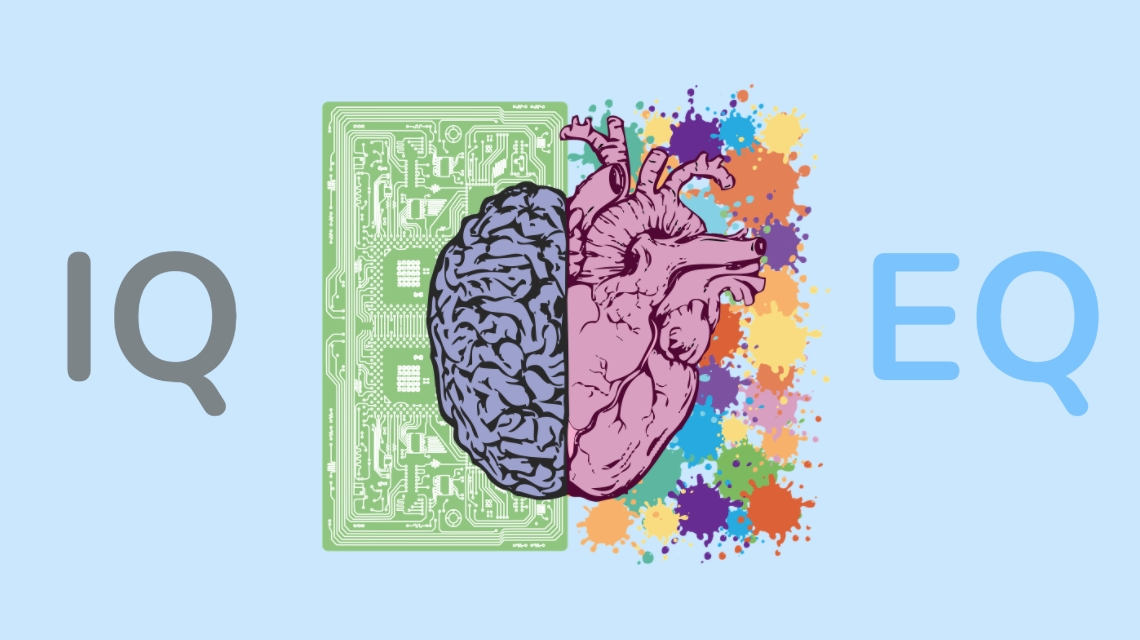
Start TestEmotional Intelligence (EQ) is the ability to perceive and understand your own feelings, as well as to recognize the emotions, intentions, motivations, and desires of others.
The concept of emotional (social) intelligence emerged as a response to the frequent inability of traditional IQ tests to predict a person's success in their career and life. This was explained by the fact that successful individuals are often highly capable of effective interaction with others based on emotional connections and efficient management of their own emotions. Traditional definitions of intelligence did not include these aspects, and standard IQ tests did not assess these skills.
It is entirely possible to develop emotional intelligence on your own. Here are some recommendations you can follow:
Pay attention to how you feel in different situations and try to name your emotions precisely (instead of just 'bad', use words like sad, anxious, or frustrated). Every feeling has its own name; here are some basic human emotions:
You should be able to distinguish between similar emotions, such as shame versus guilt, or fear versus anxiety.
People with lower emotional intelligence often find it difficult to cope with negative emotions like fear, anger, anxiety, or shame. Ideally, a person develops psychological coping mechanisms from childhood, but in practice, many people find these skills underdeveloped.
Fortunately, resilience can be improved through self-practice. There are specific self-soothing techniques for various negative feelings. For example, one way to put sadness into perspective is to practice gratitude or reflect on those facing much greater hardships. This helps your own problems feel more manageable. Many such techniques exist for every negative emotion.
Empathy is the ability to understand the feelings, emotions, and motives of other people. To develop empathy, try to go beyond just listening to what someone says—pay attention to their body language and facial expressions as markers of their emotional state. Try to put yourself in another person's shoes and imagine how you would feel in their situation.
A test to identify the presence and severity of depression.

A test to determine your personal chronotype.

A test to measure your levels of optimism and pessimism.
A test to assess your level of emotional intelligence.